
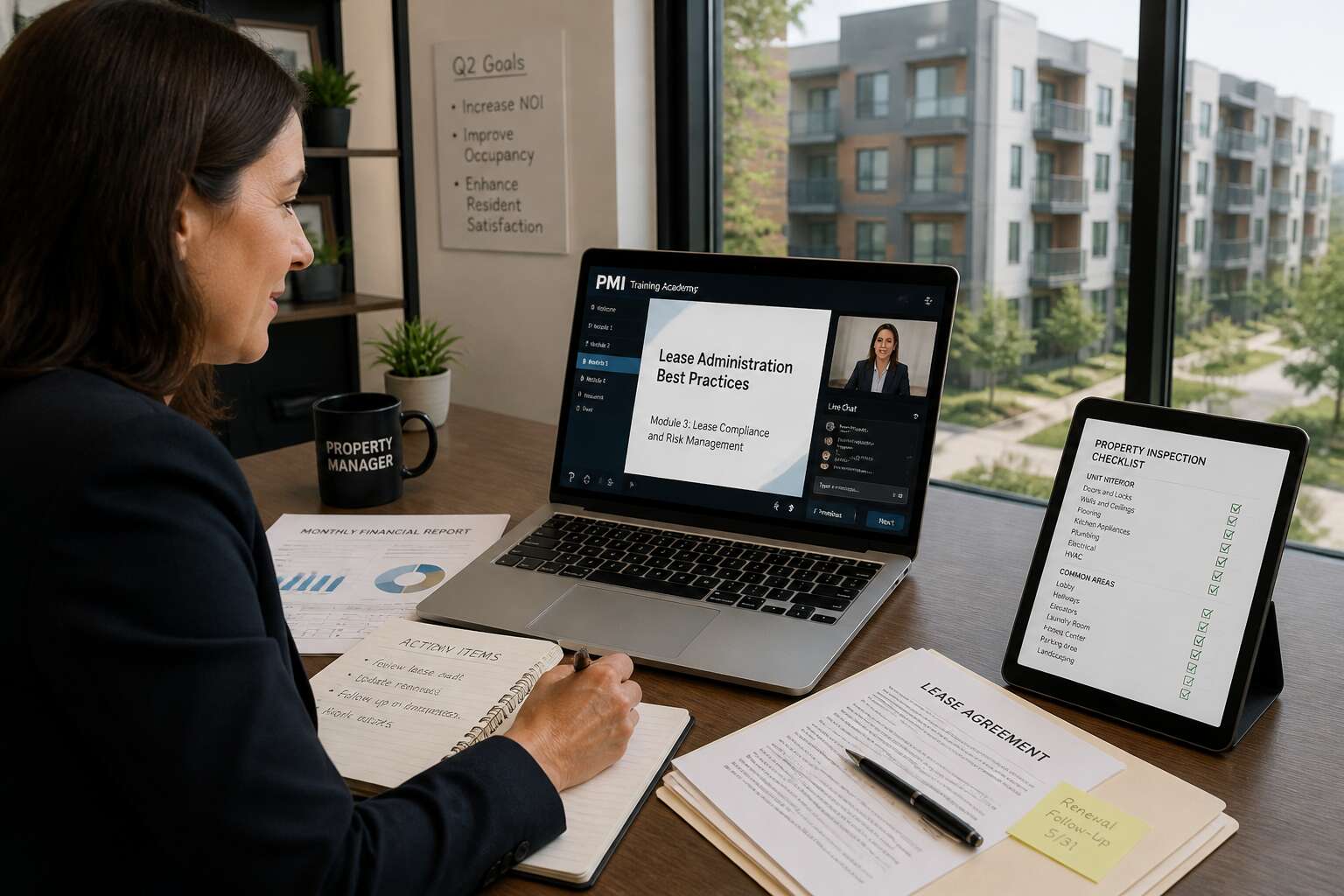
Core Competencies Developed Through Formal Study
The night shift in a Johannesburg letting agency teaches you fear. Formal study teaches you the structure behind it. Property management education eliminates guesswork, replacing instinct with statutory precision. In South Africa, the Rental Housing Act and municipal bylaws form a complex legal code. A course unpacks these sections one by one.
You learn to read financial statements with the attention of a forensic auditor. Cash flow, arrear tracking, Sectional Titles Schemes Management Act compliance. These become routine. I have seen managers fail without this foundation, unable to separate an actionable demand from a vague threat or a simple late payment.
Core competencies develop through deliberate practice:
- Tenant risk assessment and vetting protocols
- Maintenance liability frameworks under South African law
- Eviction procedure timelines and due process
Such skills are never absorbed by accident. They are built through case studies and simulated disputes. This is where the discipline holds firm in a crisis.
Navigating Certification and Licensing Requirements
In South Africa, the chasm between a working property manager and a certified one is often measured in certificates rather than competence. I have seen seasoned operators freeze over a missing stamp on a form. Licensing requirements vary by province, and the Estate Agency Affairs Board oversees much of the process, but local municipalities add their own peculiar demands. You may need a Fidelity Fund Certificate, an NQF Level 4 qualification, and a letter from your local rate office. Or you may need all three, plus a notarised copy of your childhood report card, or so it feels.
Property management education typically covers leases, maintenance, and tenant relations. It rarely prepares you for the ritual of certification. A standard application file includes:
- Certified copies of your identity document and qualifications
- Proof of residency or a municipal account statement
- A clearance certificate from the South African Police Service
- Receipts for the application fee, ideally not in cash
The irony is charming. Property management education teaches the theory; the licensing board teaches you humility.
Leveraging Online Learning Platforms for Career Advancement
An estate agent in Johannesburg told me last week that her property management education had stalled. She felt stuck. Then she discovered micro credential courses on a mobile learning platform.
Online learning fits the reality of South African property professionals. The commute in Gauteng alone eats hours. Those hours can become lectures. Short modules on tenant law, maintenance scheduling, and financial reporting are accessible between site visits. This practical approach transforms the traditional classroom model.
For property managers, the benefits stack up quickly:
1. Learn at your own pace around inspection deadlines.
2. Earn verifiable certificates for your LinkedIn profile.
3. Access case studies from Cape Town to Durban.
The key is consistency. Ten minutes daily on a reputable platform compounds into serious expertise over a year. Property management education no longer requires a lecture hall. It requires curiosity and a data plan. Ongoing property management education keeps you ahead of regulatory shifts.
Practical Experience and Mentorship in Real Estate Management
The classroom can only take you so far. The real world of property management education unfolds in the grit of a leaking geyser at 2 AM or the silent tension of a rent dispute. This is where theory meets a hammer, and the cracks show. Sitting in a lecture hall, you learn about tenant law and maintenance schedules. But you don’t learn the tactile feel of a building’s pulse, the one that tells you the foundation is shifting before the surveyor ever does.
Mentorship is the quiet compass in this chaotic landscape. A seasoned property manager, with calloused hands from a hundred turnovers, can show you the shortcuts that business school never dares to map. They teach you how to read a potential tenant’s character in a handshake, or how to negotiate with a contractor without letting him see your cards. It is a transfer of wisdom, not just information.
– You learn to trust your gut instincts, sharpened by their experience.
– You discover how to manage emotional stress when the limpet mine of a complaint explodes.
– You witness the art of maintaining a building’s soul while balancing the ledgers.
This apprenticeship is the crucible. It forges a manager who does not just process work orders, but understands the intricate choreography of a community. It gives you the confidence to walk into a board meeting in Sandton and speak with authority, knowing you have survived the trenches of a chaotic complex in Durbanville. That is the kind of alchemy that no textbook can conjure, and the very essence of a true property management education.



0 Comments